



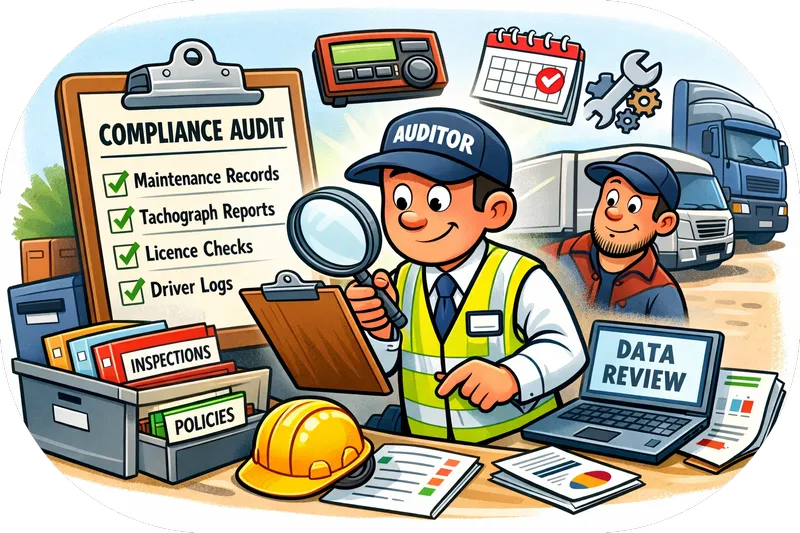
The words “compliance audit” can make even the most organised operator feel uneasy. Whether it’s a routine transport audit or something triggered by concerns, many operators are unsure what will be asked, what needs to be shown, and how prepared they really are.
The reality is this: audits shouldn’t be feared — they should be expected. And with the right preparation, they can actually strengthen your operation.
What Is a Transport Compliance Audit?
A transport compliance audit is a structured review of your operation to assess whether you are meeting your operator licence obligations.
Audits may be carried out by:
- Internal teams
- External consultants
- The DVSA
- As part of a Public Inquiry process
The purpose is simple — to build a clear picture of how well your business is being managed and whether your systems are effective.
What Auditors Look For
A compliance audit is not just about paperwork — it’s about evidence of control.
Typically, a transport audit will review:
- Maintenance systems (PMIs, inspections, defect reporting)
- Drivers’ hours and tachograph analysis
- Driver licence checks and training records
- Vehicle records and MOT history
- Policies and procedures
- Evidence of management oversight
If it’s not documented, it’s very difficult to prove it’s happening.
A Real-World Scenario
An operator believes their systems are working well. Vehicles are maintained, drivers are experienced, and issues are dealt with as they arise.
During a compliance audit, however, gaps appear:
- Missing defect reports
- No evidence of follow-up on tachograph infringements
- Inconsistent maintenance records
- Policies in place but not signed or reviewed
The issue isn’t always the operation itself — it’s the lack of evidence to support it.
How to Prepare for a Compliance Audit
Preparation is where most operators either succeed or struggle.
To get audit-ready:
- Ensure all records are complete, accurate, and accessible
- Keep at least 15 months of maintenance records
- Regularly review tachograph reports and document actions taken
- Confirm driver licence checks and training records are up to date
- Keep policies current and signed where required
- Store everything in a structured, easy-to-find system
A good rule: if someone asked for it tomorrow, could you produce it within minutes?
Common Mistakes to Avoid
Operators often run into issues with:
- Relying on memory instead of records
- Having systems in place but not reviewing them
- Not evidencing corrective action
- Leaving document control to chance
- Assuming “no news is good news”
Compliance is not just about doing the right thing — it’s about proving you are doing the right thing.
Why Compliance Audits Matter
Regular compliance and audits help operators:
- Identify risks early
- Strengthen systems
- Improve safety standards
- Prepare for DVSA scrutiny
- Reduce the likelihood of enforcement action
The most successful operators treat audits as part of their routine — not something to worry about.
The Key Takeaway
A compliance audit should never be the first time you look at your systems properly.
If your operation is organised, documented, and reviewed regularly, an audit becomes a confirmation — not a concern.
Need Support With a Transport Audit?
If you’re unsure where your operation stands, or want to prepare properly for a transport compliance audit, we can help.
LDP Transport Consultancy supports operators with:
- Independent compliance audits
- Audit preparation and gap analysis
- Ongoing compliance systems
- Driver and management support
If you want to be confident going into your next audit, get in touch today.