



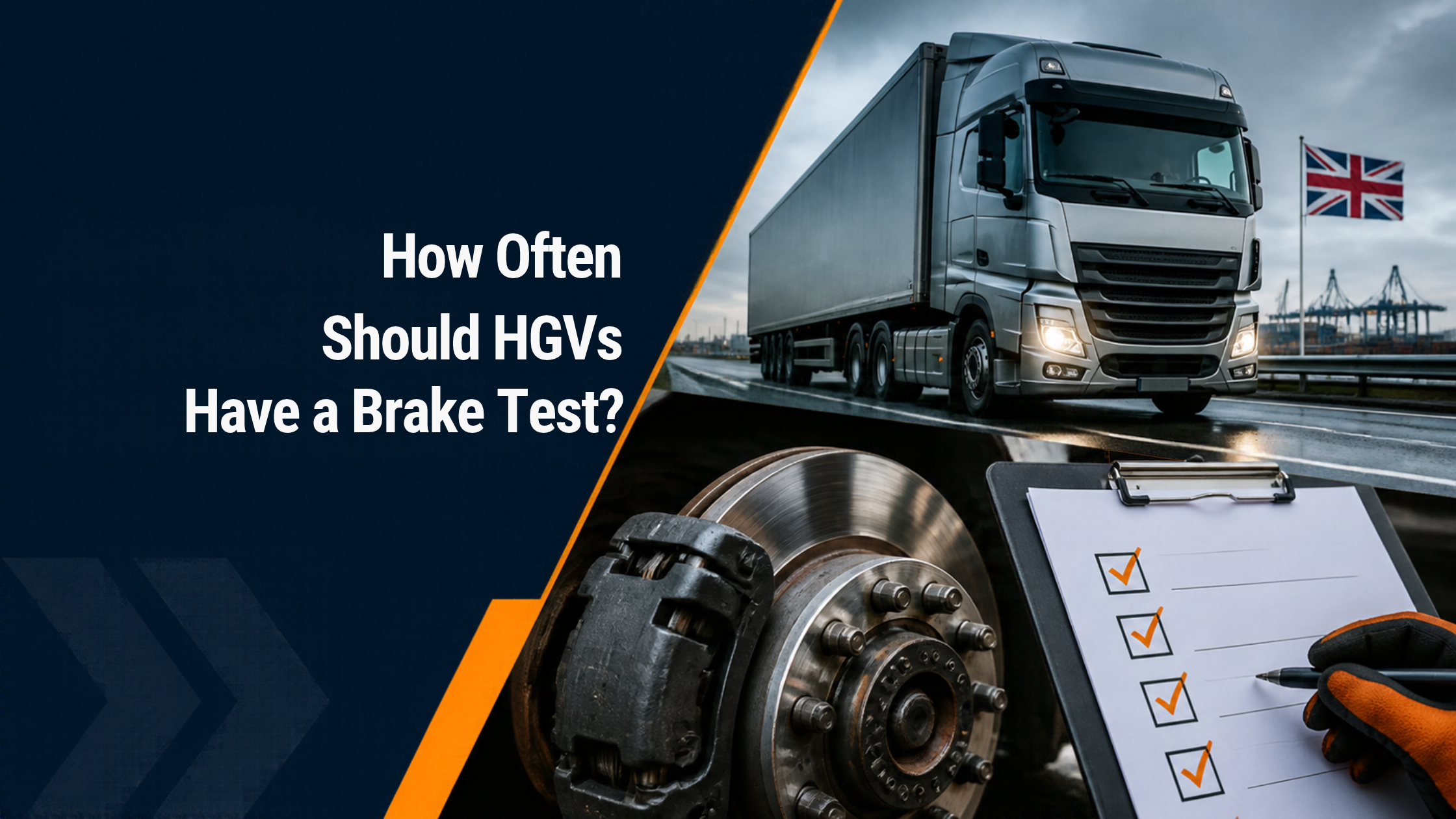
HGV operators should assess braking performance at every scheduled safety inspection. DVSA guidance identifies a laden roller brake test as the most effective method, although other permitted assessment methods may be appropriate in certain circumstances.
Where an Electronic Braking Performance Monitoring System (EBPMS) is not used, DVSA expects at least four laden brake tests spread evenly throughout the year, which can include the annual MOT.
Simply having your vehicles inspected regularly does not mean their braking performance is being properly assessed.
What Does DVSA Expect From HGV Brake Testing?
The DVSA Guide to Maintaining Roadworthiness sets out the expectations for assessing vehicle and trailer braking performance.
Operators should ensure that:
- Braking performance is assessed at every safety inspection.
- Laden roller brake tests are carried out wherever practicable.
- Brake test reports are reviewed by someone competent to interpret the results.
- Results are retained with the vehicle maintenance records.
- Unsatisfactory results are investigated and appropriate repairs completed.
- Meaningful testing confirms braking performance following relevant repairs.
A brake test report should not simply be attached to an inspection sheet without being reviewed.
Do HGVs Need a Laden Brake Test at Every Inspection?
A laden roller brake test is the preferred method because it provides a more meaningful assessment of braking performance.
However, DVSA recognises that there are circumstances where laden testing may not be practical.
Where a laden test is not carried out, a competent person must complete and evaluate an appropriate risk assessment. An alternative braking performance assessment is still required.
For suitable trailers fitted with EBPMS, a satisfactory performance report may be used, provided it is evaluated, signed and dated before the safety inspection.
The key point is that operators must demonstrate that their braking systems are being effectively monitored.
What Happens if a Brake Test Fails?
An unsatisfactory brake test should trigger an investigation.
The operator should establish the cause, arrange appropriate repairs and ensure that satisfactory braking performance is demonstrated before the vehicle returns to service.
Repeated poor brake test results should also prompt a wider review of maintenance standards.
Consider whether the problem involves the maintenance provider, inspection procedures, vehicle condition or ineffective management oversight.
Is Your Maintenance Provider Doing Enough?
Many HGV operators outsource their maintenance and assume that their provider is managing brake testing correctly.
However, responsibility for maintaining roadworthy vehicles remains with the operator.
You should regularly review your brake test reports and check that your maintenance provider is following the agreed arrangements.
An independent compliance audit can help identify weaknesses in brake testing, preventative maintenance inspections and the management of vehicle maintenance records.
For further guidance, read the DVSA Guide to Maintaining Roadworthiness.
Need an Independent Vehicle Maintenance Compliance Review?
LDP Transport Consultancy provides independent Operator Licence compliance audits, including reviews of vehicle maintenance arrangements and brake testing records.
If you're unsure whether your current brake testing arrangements meet DVSA expectations, contact LDP Transport Consultancy to discuss an independent compliance review.